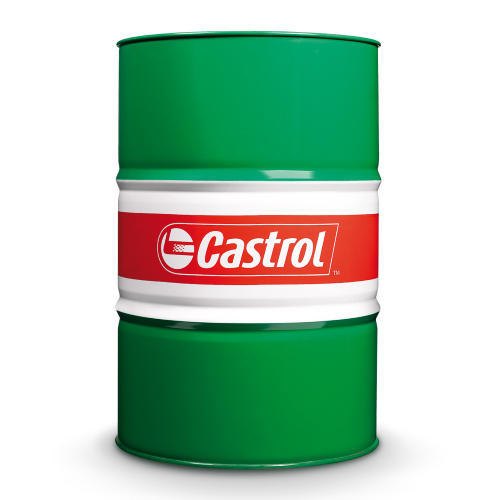
Castrol VECTON with System Pro Technology™ is a range of advanced diesel engine oils formulated with extra performance reserve for longer useful oil life.
SPECIFICATIONS / INDUSTRY STANDARDS
-
ACEA E7
- API CI-4/SL
- JASO DH-1
- CAT ECF-2
- Cummins CES 20077, CES 20078
- DDC Powerguard 93K215
- Deutz DQC III-10
- Mack EO-M Plus, EO-N
- MB-Approval 228.3
- MTU Oil Category 2
- RVI RLD-2
- Volvo VDS-3
- Meets requirements of MAN M 3275-1
ADVANTAGES
Castrol VECTON 15W-40 CI-4/E7 with System Pro Technology™ delivers up to 45% extra performance reserve* that fights oil breakdown and also adapts to higher temperatures for longer useful oil life, giving you confidence in your maximum drain interval.
All Castrol VECTON products are certified CO2 neutral according to the internationally applicable PAS2060 standard.
Modern trucks use new technologies to make as much as 30% higher torque, but that also brings higher engine temperatures and pressures. This punishes the oil, pushing it closer to breakdown, reducing its useful life. Castrol VECTON 15W-40 CI-4/E7's System Pro Technology™ formulated with extra performance reserve fights oil breakdown by:
- Controlling oxidation and deposits
- Neutralizing harmful acids
- Maintaining viscosity
System Pro Technology™ also adapts to increased temperatures resisting viscosity loss throughthermal and mechanical shear. All of this means longer useful oil life giving you the confidence in yourmaximum drain interval.
*Compared to API and ACEA industry requirements and based on tests conducted on 81% of theCastrol VECTON range by volume using 12 months sales up to March 2017.
Diesel Engines
(Follow your vehicle manufacturer’s recommendations on oil performance levels)
Category
|
Status
|
Service
|
| CK-4 |
Current |
API Service Category CK-4 describes oils for use in high-speed four-stroke cycle diesel engines designed to meet 2017
model year on-highway and Tier 4 non-road exhaust emission standards as well as for previous model year diesel
engines. These oils are formulated for use in all applications with diesel fuels ranging in sulfur content up to 500 ppm
(0.05% by weight). However, the use of these oils with greater than 15 ppm (0.0015% by weight) sulfur fuel may impact
exhaust aftertreatment system durability and/or oil drain interval. These oils are especially effective at sustaining emission
control system durability where particulate filters and other advanced aftertreatment systems are used. API CK-4 oils
are designed to provide enhanced protection against oil oxidation, viscosity loss due to shear, and oil aeration as well as
protection against catalyst poisoning, particulate filter blocking, engine wear, piston deposits, degradation of low- and
high-temperature properties, and soot-related viscosity increase. API CK-4 oils exceed the performance criteria of API
CJ-4, CI-4 with CI-4 PLUS, CI-4, and CH-4 and can effectively lubricate engines calling for those API Service Categories.
When using CK-4 oil with higher than 15 ppm sulfur fuel, consult the engine manufacturer for service interval recommendations. |
| CJ-4 |
Current |
For high-speed four-stroke cycle diesel engines designed to meet 2010 model year on-highway and Tier 4 non-road
exhaust emission standards as well as for previous model year diesel engines. These oils are formulated for use in all
applications with diesel fuels ranging in sulfur content up to 500 ppm (0.05% by weight). However, the use of these oils
with greater than 15 ppm (0.0015% by weight) sulfur fuel may impact exhaust aftertreatment system durability and/or
drain interval. API CJ-4 oils exceed the performance criteria of API CI-4 with CI-4 PLUS, CI-4, CH-4, CG-4 and CF-4 and
can effectively lubricate engines calling for those API Service Categories. When using CJ-4 oil with higher than 15 ppm
sulfur fuel, consult the engine manufacturer for service interval. |
| CI-4 |
Current |
Introduced in 2002. For high-speed, four-stroke engines designed to meet 2004 exhaust emission standards implemented
in 2002. CI-4 oils are formulated to sustain engine durability where exhaust gas recirculation (EGR) is used and are
intended for use with diesel fuels ranging in sulfur content up to 0.5% weight. Can be used in place of CD, CE, CF-4,
CG-4, and CH-4 oils. Some CI-4 oils may also qualify for the CI-4 PLUS designation. |
| CH-4 |
Current |
Introduced in 1998. For high-speed, four-stroke engines designed to meet 1998 exhaust emission standards. CH-4 oils
are specifically compounded for use with diesel fuels ranging in sulfur content up to 0.5% weight. Can be used in place
of CD, CE, CF-4, and CG-4 oils. |
| CG-4 |
Obsolete |
CAUTION: Not suitable for use in most diesel-powered automotive engines built after 2009. |
| CF-4 |
Obsolete |
CAUTION: Not suitable for use in most diesel-powered automotive engines built after 2009. |
| CF-2 |
Obsolete |
CAUTION: Not suitable for use in most diesel-powered automotive engines built after 2009. Two-stroke cycle engines
may have different lubrication requirements than four-stroke engines, so the manufacturer should be
contacted for current lubrication recommendations. |
| CF |
Obsolete |
CAUTION: Not suitable for use in most diesel-powered automotive engines built after 2009. Later “C” category oils
are usually suitable or preferred for diesel automotive engines for which “CF” oils were specified. Older
equipment and/or two-stroke diesel engines, especially those calling for monograde products, may
however require “CF” category oil. |
| CE |
Obsolete |
CAUTION: Not suitable for use in most diesel-powered automotive engines built after 1994. |
| CD-II |
Obsolete |
CAUTION: Not suitable for use in most diesel-powered automotive engines built after 1994. |
| CD |
Obsolete |
CAUTION: Not suitable for use in most diesel-powered automotive engines built after 1994. |
| CC |
Obsolete |
CAUTION: Not suitable for use in most diesel-powered engines built after 1990. |
| CB |
Obsolete |
CAUTION: Not suitable for use in most diesel-powered engines built after 1961. |
| CA |
Obsolete |
CAUTION: Not suitable for use in most diesel-powered engines built after 1959. |
Source: https://www.api.org/products-and-services/engine-oil/eolcs-categories-and-classifications/oil-categories#tab-diesel-c-categories