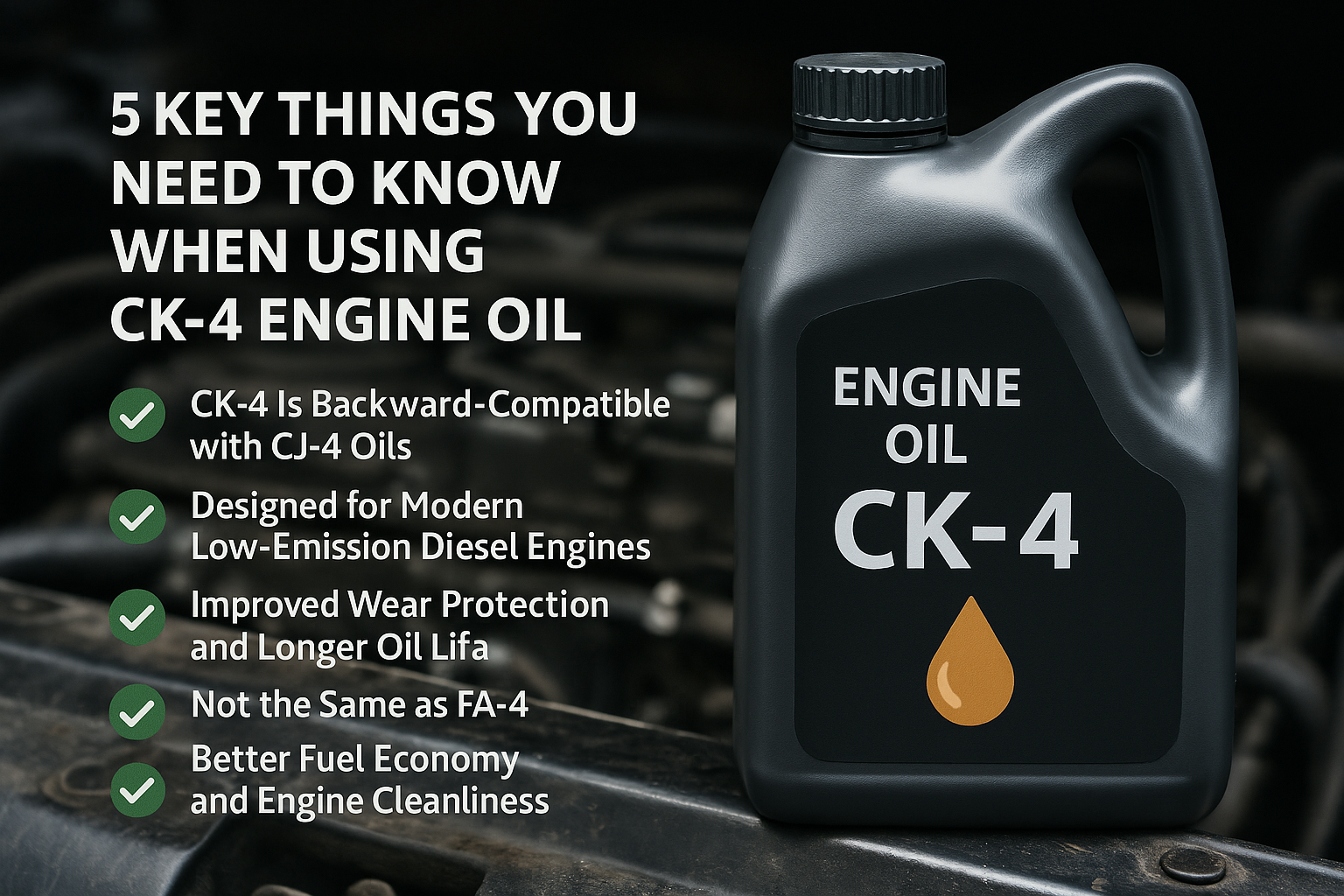
Selecting the best engine oil is vital for maximizing the performance and durability of your diesel engine. If you’re exploring or currently using CK-4 engine oil, understanding its key features can help you optimize its benefits. Introduced by the American Petroleum Institute (API), the CK-4 category is engineered to meet the rigorous demands of modern diesel engines. Here’s everything you need to know about CK-4 engine oil to ensure proper maintenance and efficiency.
1. CK-4 Engine Oil Offers Backward Compatibility with CJ-4 Oils
A common question among fleet managers and diesel engine owners is whether CK-4 oil is compatible with older engines. The good news? CK-4 engine oils are fully backward-compatible with previous API categories, including CJ-4, CI-4, and CH-4. This compatibility allows you to use CK-4 oil in older diesel engines without requiring modifications or specialized upkeep.
Pro Tip: Always consult your vehicle or equipment manual for OEM recommendations to confirm CK-4 compatibility with your specific engine.
2. Tailored for Modern Low-Emission Diesel Engines
CK-4 engine oils were developed to align with updated emission standards, particularly for diesel engines manufactured after 2017. These oils provide exceptional oxidation stability, shear stability, and protection against oil aeration—making them a perfect match for advanced exhaust after-treatment systems like Diesel Particulate Filters (DPF) and Selective Catalytic Reduction (SCR).
Warning: Using lower-grade oils in modern engines can increase emissions or cause DPF clogging, compromising performance.
3. Superior Wear Protection and Extended Oil Life
CK-4 oils are formulated with advanced anti-wear additives that safeguard critical engine parts—such as the valvetrain, camshafts, and pistons—under high-load or high-temperature conditions. With improved thermal stability, CK-4 engine oil extends drain intervals, minimizing maintenance downtime, provided it aligns with OEM guidelines.
Maintenance Tip: Regularly monitor oil condition and use oil analysis to safely extend CK-4 oil change intervals.
4. CK-4 vs. FA-4 Oil: Know the Difference
Confusion often arises between CK-4 and FA-4 oils, both introduced simultaneously by the API. Here’s a clear breakdown:
- CK-4: Versatile for both older and newer engines, available in standard viscosity grades like 15W-40 and 10W-30.
- FA-4: Engineered for next-generation, fuel-efficient engines, typically in lower-viscosity grades (e.g., 10W-30 FA-4), and not backward-compatible.
Key Insight: Choose the correct oil category based on your engine type to avoid performance setbacks.
5. Enhanced Fuel Economy and Engine Cleanliness
Thanks to high-quality base oils and cutting-edge additive technology, CK-4 engine oils boost fuel efficiency while keeping your engine clean. They reduce deposits, soot thickening, and sludge buildup—crucial for engines operating in tough conditions or during prolonged idling.
Benefit: Cleaner engines run more efficiently, last longer, and lower your operating costs over time.
Why Choose CK-4 Engine Oil?
CK-4 engine oil is an excellent choice for both modern and legacy diesel engines, delivering top-tier protection, performance, and compliance with stringent emission standards. To get the most out of it:
- Verify OEM specifications.
- Avoid mixing CK-4 with FA-4 unless explicitly approved.
- Use oil analysis to optimize CK-4 oil change intervals.
Whether you’re overseeing a fleet, maintaining heavy machinery, or servicing commercial vehicles, CK-4 engine oil provides reliability and exceptional engine protection.